
Cheque Bounce Cases in New Delhi: Complete Legal Guide Under Section 138 NI Act
18
Feb
Cheque Bounce Cases in New Delhi: Complete Legal Guide Under Section 138 NI Act
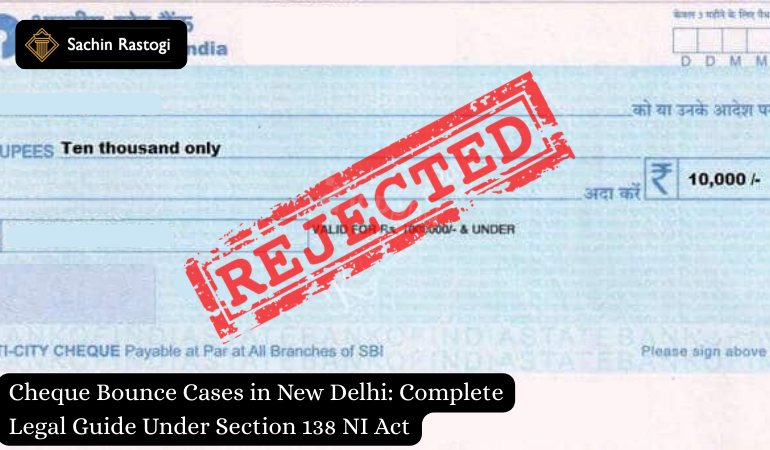
Cheque bounce cases in New Delhi are governed by Section 138 of the Negotiable Instruments Act, 1881, which makes cheque dishonour for unpaid debt a criminal offence.
Cheque transactions are still widely used in business dealings, property transactions, loan repayments, rental payments and personal financial arrangements. Although digital payments are increasing, cheques remain an important financial instrument.
When a cheque is returned unpaid by the bank, it can create serious legal consequences for the drawer. Under Indian law, cheque dishonour is not just a civil wrong it can amount to a criminal offence if legal conditions are satisfied.
This guide explains the complete legal framework, procedure, punishment, timelines and settlement options for cheque bounce cases in New Delhi under Section 138 of the Negotiable Instruments Act.
Legal Framework: Section 138 of the Negotiable Instruments Act, 1881
Cheque bounce matters are governed by the Negotiable Instruments Act, 1881, particularly Section 138. This provision applies when a cheque is dishonoured due to:
- Insufficient funds
- Exceeding arrangement with the bank
For Section 138 to apply, the following conditions must be fulfilled:
- The cheque must be drawn on an account maintained by the drawer.
- The cheque must be issued for discharge of a legally enforceable debt or liability.
- The cheque must be presented within its validity period (currently 3 months from the date on the cheque).
- The cheque must be returned unpaid by the bank.
- A written legal demand notice must be sent within 30 days of receiving the bank return memo.
- The drawer must fail to make payment within 15 days of receiving the legal notice.
Only when all these requirements are met does the offence under Section 138 arise.
What is a Legally Enforceable Debt?
A key requirement is that the cheque must have been issued for a legally enforceable debt or liability. Examples include:
- Business dues
- Friendly loans
- Property transaction payments
- Outstanding invoices
- Repayment of borrowed money
If a cheque is issued as a gift or without any enforceable obligation, Section 138 may not apply.
Under Section 139 of the Act, there is a legal presumption that the cheque was issued towards a debt or liability. However, this presumption is rebuttable, meaning the accused can present evidence to challenge it.
Jurisdiction of Cheque Bounce Cases in New Delhi
After the 2015 amendment to the Negotiable Instruments Act, jurisdiction is determined based on the location of the bank branch where the cheque is presented for collection (the payee’s bank).
In New Delhi, cheque bounce complaints are filed before the Metropolitan Magistrate having jurisdiction over the area where the complainant’s bank branch is situated.
Step-by-Step Legal Procedure
1. Dishonour of Cheque
When a cheque is dishonoured, the bank issues a return memo stating the reason (e.g., “Funds Insufficient”).
2. Sending Legal Notice
The payee must send a legal demand notice within 30 days from receiving the bank memo. The notice must demand payment of the cheque amount.
3. Waiting Period of 15 Days
The drawer is given 15 days from the date of receipt of notice to make payment. If payment is made within this period, no offence is committed.
4. Filing the Complaint
If payment is not made within 15 days, the complainant can file a criminal complaint within one month from the expiry of the notice period.
5. Court Proceedings
Once filed:
- The court examines the complaint and documents.
- Summons are issued to the accused.
- The accused appears and seeks bail.
- Notice of accusation is framed.
- Evidence is recorded (usually by affidavit).
- Arguments are heard.
- Judgment is delivered.
Cheque bounce cases are generally tried summarily for quicker disposal.
Punishment Under Section 138
If convicted, the accused may face:
- Imprisonment up to 2 years; or
- Fine up to twice the cheque amount; or
- Both.
Courts often prioritize compensation to the complainant over imprisonment, especially where settlement is possible.
Settlement and Compounding of Cases
Cheque bounce offences are compoundable. This means both parties can settle the matter at any stage:
- Before filing the complaint
- During trial
- During appeal
Courts encourage early settlement to reduce litigation burden. Upon settlement, the court closes the proceedings.
Common Defences Available to the Accused
The accused may raise the following defences:
- No legally enforceable debt existed
- Cheque was issued as security
- Cheque was misused
- Signature was not genuine
- Notice was not properly served
However, due to statutory presumptions under Section 139, the burden shifts to the accused to rebut the presumption with credible evidence.
Documents Required to File a Cheque Bounce Case
The complainant generally requires:
- Original cheque
- Bank return memo
- Copy of legal notice
- Proof of dispatch of notice
- Proof of delivery (if available)
- Documents proving liability
Proper documentation is crucial to avoid dismissal.
Important Timelines Summary
- Cheque validity: 3 months
- Legal notice: Within 30 days of dishonour
- Payment window: 15 days from notice receipt
- Complaint filing: Within 1 month after expiry of 15 days
Courts may condone delay if sufficient cause is shown.
Civil and Criminal Remedies
Apart from criminal proceedings under Section 138, a complainant may also:
- File a civil suit for recovery
- Initiate summary suit proceedings under Order 37 CPC
Both remedies can proceed simultaneously.
Practical Insights for New Delhi Cases
In New Delhi courts:
- Cases are handled by Metropolitan Magistrates.
- Evidence is often filed by affidavit.
- Mediation and settlement are commonly encouraged.
- Multiple dishonoured cheques may require separate complaints unless legally consolidated.
Proper legal guidance ensures compliance with strict procedural requirements.
Cheque bounce cases in New Delhi are governed by a structured legal framework under Section 138 of the Negotiable Instruments Act, 1881. The law protects financial credibility by imposing criminal liability for dishonoured cheques issued towards legally enforceable debts. Strict timelines, proper documentation and correct legal procedure are essential for success in such cases.
Whether you are filing a complaint or defending yourself against one, timely legal advice is crucial to protect your rights and financial interests.
Contact for Legal Assistance
For professional legal representation in cheque bounce matters and Section 138 NI Act cases in New Delhi, consult Sachin Rastogi for reliable advice and effective courtroom representation. Protect your legal rights with experienced and strategic legal support today.
